Chatbot Development: Building a Bot Customers Actually Want to Talk To
Learn what makes chatbot development succeed or fail, and how to build a chatbot that genuinely improves customer engagement instead of frustrating users.
By Aptagon Technologies · October 18, 2025 · 3 Min Read
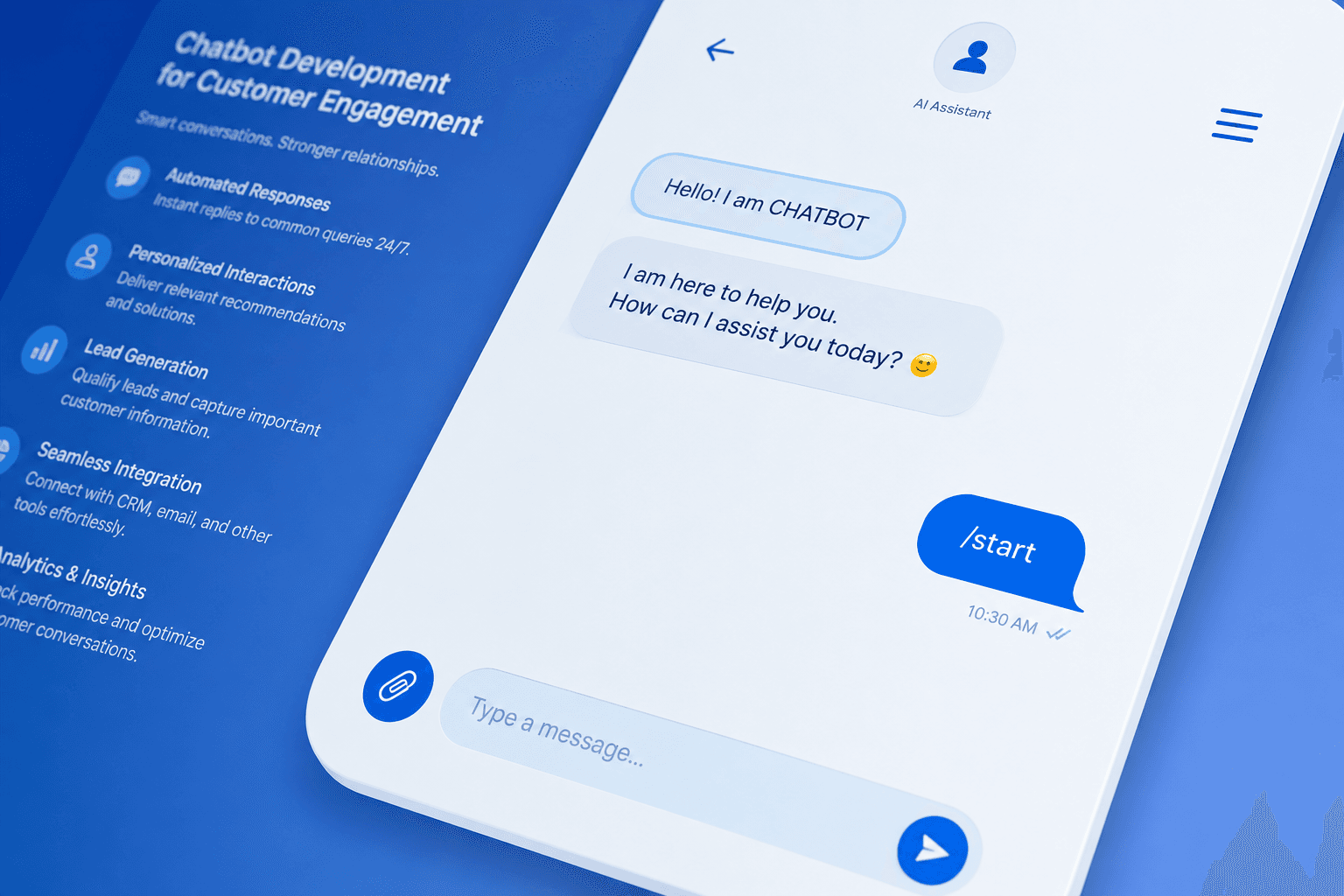
Most people have a bad chatbot story — endless loops, irrelevant answers, or a bot that clearly couldn't understand a simple question. This reputation isn't really about chatbots as a technology; it's about how most of them are built: broad scope, minimal planning, and little thought given to what happens when the bot doesn't know the answer.
Why Chatbots Fail More Often Than They Succeed
The common mistake is trying to make a chatbot handle everything a human support agent could handle, on day one. This spreads the bot's capability too thin, and the result is a system that handles nothing particularly well — leading to the frustrating experiences most people associate with chatbots.
What Makes a Chatbot Actually Work
1. A narrow, well-defined scope. The best chatbots start by handling a specific set of common questions extremely well, rather than attempting broad coverage poorly.
2. Clear, honest limitations. A chatbot that says "I can't help with that, let me connect you to someone who can" builds more trust than one that gives a vague or incorrect answer.
3. Natural conversation design. Scripted, robotic phrasing is one of the fastest ways to lose a user's patience — tone and flow matter as much as accuracy.
4. Fast escalation to a human when needed. Users should never feel stuck. A visible, easy path to a human agent turns a potential frustration into a smooth experience.
5. Integration with real business data. A chatbot that can actually check an order status or account detail — rather than giving generic responses — provides far more value than a purely scripted FAQ bot.
Where Chatbots Deliver the Most Value
Beyond customer support, chatbots are increasingly used for lead qualification (asking a few questions before connecting a visitor to sales), appointment booking, and guiding users through onboarding steps. In each case, the same principle applies: narrow scope done well beats broad scope done poorly.
Building It Right
A chatbot's success depends far more on planning and conversation design than on the underlying technology. Good chatbot development starts with mapping your most common customer interactions, then building a bot scoped specifically to handle those well — often integrated with business process automation so the bot can take real actions, not just answer questions. For more advanced conversational capability, this can be extended with custom LLM development tailored to your business's specific language and knowledge base.
If your current chatbot is creating more frustration than value — or you're building one for the first time — Aptagon Technologies can help you scope and build one people actually want to use. Get in touch to discuss your use case.
Key Takeaways
- 1Most failed chatbots try to handle too broad a scope with too little planning.
- 2Honest limitations and easy human handoff build more trust than scripted guesses.
- 3Natural conversational tone significantly affects user satisfaction.
- 4Integrating with real business data makes a chatbot genuinely useful, not just decorative.
Related Articles



Frequently Asked Questions
Usually because they're built to handle too broad a scope with too little planning around conversation flow, leaving users stuck in loops or given irrelevant answers to specific questions.
Ready to Build Your Next Digital Solution?
Turn your ideas into scalable, intelligent, and impactful digital products with Aptagon Technologies.
Talk to Our Experts →